Your skin renews itself every 28 days—but what if you could accelerate that process safely? Modern chemical peeling treatments are designed to encourage controlled exfoliation, revealing fresher, smoother, and healthier-looking skin beneath the surface. Whether you are struggling with acne, uneven skin tone, sun damage, or early signs of aging, a professionally administered peel can be an effective solution tailored to your skin type and goals.
Many people considering a chemical peel for acne scars also wonder whether the treatment is suitable for sensitive skin, darker complexions, or persistent pigmentation. The answer depends on selecting the appropriate peel strength and having the procedure performed by experienced skincare professionals. At Damas SkinCare SPA & Laser Clinic, every treatment begins with a personalized skin assessment to ensure both safety and optimal results.
This guide explains how chemical peels work, the different peel options available, which skin concerns they address, and why professional treatment is often a safer and more effective alternative to at-home products.
What Is a Chemical Peel?
A chemical peel is a professional skin-resurfacing treatment that uses carefully formulated acids to exfoliate the outermost layers of the skin. This controlled process removes damaged skin cells, encourages cellular renewal, and stimulates collagen production, leaving the complexion smoother, brighter, and more even over time.
Unlike harsh scrubs that only work on the surface, chemical peels penetrate specific skin depths depending on the formulation used. This allows skincare professionals to customize the treatments for concerns ranging from mild dullness to acne scarring and pigmentation.
How Chemical Peels Work
Chemical peels accelerate the skin’s natural renewal cycle by loosening the bonds that hold dead skin cells together. As these damaged cells shed naturally, healthier skin emerges underneath.
Beyond simple exfoliation, professional peels also stimulate fibroblasts to produce new collagen and elastin. Increased collagen improves skin firmness, reduces the appearance of fine lines, and supports long-term skin health. This is one reason why many clients seeking a chemical peel for acne scars notice gradual improvements in both texture and skin tone after a treatment series.
Types of Chemical Peels Available at Damas SkinCare SPA & Laser Clinic
Every skin concern requires a different treatment strategy. Rather than using a one-size-fits-all approach, Damas SkinCare SPA & Laser Clinic selects peels based on skin condition, sensitivity, and desired results.
Superficial Peels
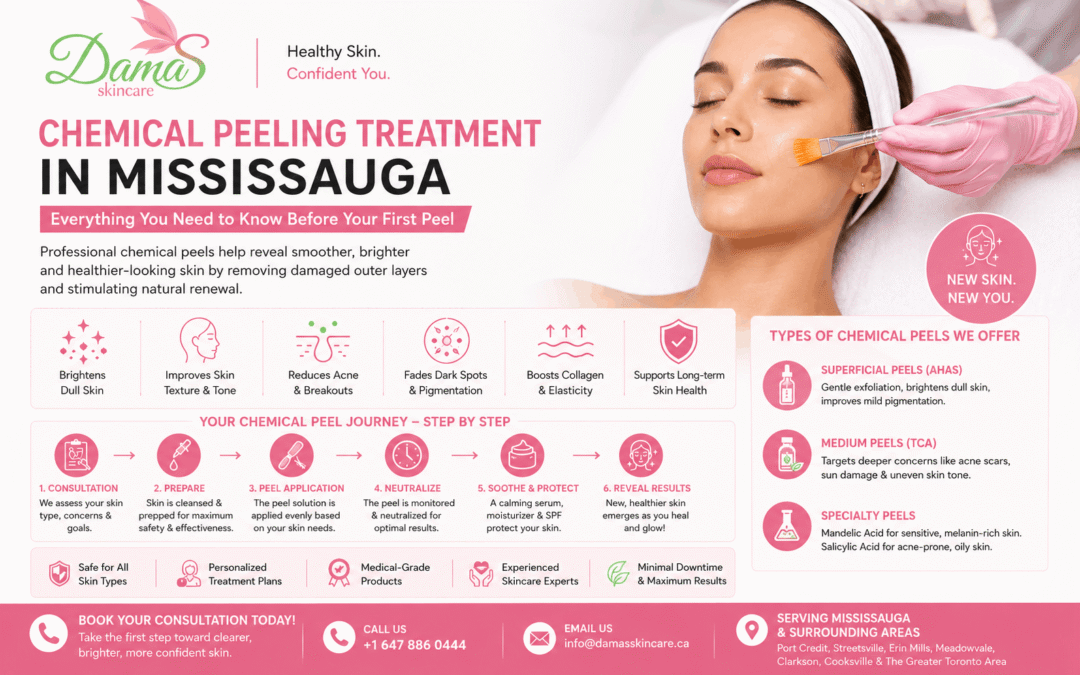
Superficial peels typically contain Alpha Hydroxy Acids (AHAs), including glycolic and lactic acid. These treatments gently exfoliate the epidermis without significant downtime, making them ideal for maintaining healthy skin and improving mild pigmentation, roughness, and dehydration.
Clients searching online for a glycolic peel near me often benefit from professional glycolic acid treatments because the concentration and application time are carefully controlled for maximum safety and effectiveness.
Medium Peels
Medium-depth peels use trichloroacetic acid (TCA) to reach deeper skin layers. These treatments are commonly recommended for more noticeable pigmentation, acne scars, uneven texture, and sun damage.
A professionally administered TCA peel in Mississauga can significantly improve stubborn discoloration and moderate scarring when performed by trained skincare professionals using individualized treatment protocols.
Specialty Peels
Some skin types require specialized acids that provide effective exfoliation with reduced irritation.
Mandelic acid peels are particularly suitable for sensitive or melanin-rich complexions because they penetrate more slowly, lowering the risk of irritation. Salicylic acid peels are highly effective for oily and acne-prone skin, as they dissolve excess sebum within pores while reducing inflammation.
What Skin Concerns Does Chemical Peeling Treat?
Chemical peels are among the most versatile non-invasive skin treatments available today. By selecting the appropriate acid and peel depth, professionals can safely address multiple skin concerns while improving overall skin quality.
Acne and Post-Acne Marks
Persistent acne often leaves behind both active breakouts and lingering post-inflammatory pigmentation. Salicylic acid peels penetrate oily pores, reducing congestion and minimizing acne-causing bacteria while calming inflammation.
Over multiple sessions, these treatments also help fade post-acne marks and improve uneven texture, making them an effective option for clients seeking smoother skin after recurring breakouts.
Hyperpigmentation & Dark Spots
Excess melanin production caused by sun exposure, acne, or inflammation can leave noticeable dark patches across the skin.
Professional glycolic and TCA treatments gradually lift pigmented surface cells while encouraging healthier skin regeneration. Patients seeking treatment for chemical peel hyperpigmentation often experience progressively brighter and more even skin after completing a customized treatment plan.
A professionally performed TCA peel in Mississauga may also be recommended for deeper pigmentation that does not respond well to superficial exfoliation alone.
Melasma
Melasma presents unique challenges because heat, hormones, and sun exposure all contribute to recurring pigmentation.
For many patients, gentler formulations such as mandelic acid or lactic acid provide safer options than aggressive peeling. These acids help reduce discoloration while minimizing inflammation, an important consideration for individuals prone to pigmentation rebound.
This personalized approach is especially valuable when treating clients with medium-to-deep complexions.
Fine Lines and Uneven Texture
As collagen production naturally slows with age, the skin begins developing rough texture and fine lines.
Chemical peels stimulate controlled collagen remodeling, improving skin firmness while smoothing superficial wrinkles. Regular treatments often create healthier, more refined skin without requiring invasive procedures.
Dull, Sun-Damaged Skin
Environmental pollution, UV exposure, and everyday stress gradually reduce the skin’s natural radiance.
Superficial chemical peels remove accumulated dead skin cells, allowing healthier skin to reflect light more evenly. The result is a fresher complexion that appears brighter, smoother, and more youthful after the healing process is complete.
Is Chemical Peeling Safe for Darker Skin Tones?
One of the most common misconceptions is that chemical peels are unsafe for deeper skin tones. In reality, professionally selected peels can be highly effective for melanin-rich skin when appropriate acids and concentrations are used.
The greatest concern for darker complexions is post-inflammatory hyperpigmentation (PIH), which can occur if overly aggressive treatments create unnecessary inflammation. This is why Fitzpatrick Skin Types IV through VI require experienced practitioners who understand how different acids interact with higher melanin levels.
Rather than relying on strong peel concentrations, experienced estheticians often choose gentler acids, lower strengths, and gradual treatment plans to minimize complications while delivering visible improvements.
At Damas SkinCare SPA & Laser Clinic, every consultation includes a comprehensive skin analysis before treatment begins. Factors such as skin sensitivity, previous reactions, pigmentation history, medications, and lifestyle are carefully evaluated before selecting an appropriate peel.
Clients seeking a chemical peel for brown skin frequently benefit from mandelic acid, lactic acid, or carefully customized superficial peels that improve brightness while preserving the skin barrier. Professional assessment significantly reduces unnecessary risks and improves treatment outcomes.
Damas SkinCare SPA & Laser Clinic has successfully treated clients from diverse ethnic backgrounds, including South Asian, Middle Eastern, Black, and Latin communities. Because every complexion responds differently, personalized treatment planning remains the foundation of safe and effective chemical peeling.
For individuals researching chemical peel hyperpigmentation, choosing a qualified provider is often more important than selecting a particular acid. Professional expertise ensures that pigmentation concerns are treated progressively without triggering additional discoloration.
Chemical Peeling at Damas Skincare — What to Expect
Choosing a professional chemical peel is about more than the treatment itself. The consultation, preparation, procedure, and recovery all contribute to achieving safe, consistent, and long-lasting results. At Damas SkinCare SPA & Laser Clinic, every step is personalized to your skin type, concerns, and lifestyle to maximize benefits while minimizing unnecessary irritation.
The Consultation
Every successful treatment begins with a comprehensive skin consultation. During your appointment, an experienced esthetician evaluates your skin type, hydration levels, pigmentation patterns, acne severity, medical history, and current skincare routine. They also discuss your expectations to determine whether a superficial, medium, or specialty peel is the most appropriate option.
This individualized approach ensures that concerns such as acne, pigmentation, fine lines, or sensitivity are treated using the safest and most effective formulation.
Pre-Peel Preparation
Preparing your skin properly before treatment significantly improves both safety and results. During the week leading up to your appointment, your skincare professional may recommend avoiding products and activities that increase skin sensitivity.
Typical pre-treatment guidelines include:
* Discontinue retinol and prescription retinoids several days before treatment.
* Avoid physical exfoliants, facial scrubs, and strong acids.
* Minimize direct sun exposure and tanning.
* Skip waxing, threading, or laser treatments on the treatment area.
* Keep the skin well hydrated using gentle moisturizers.
Following these recommendations helps reduce irritation while allowing the peel to work more evenly across the skin.
The Treatment Session
Most chemical peel appointments take approximately 30 to 45 minutes, depending on the type of peel selected.
The procedure generally follows these steps:
1. The skin is thoroughly cleansed to remove makeup, oil, and impurities.
- A degreasing solution prepares the skin for even acid penetration.
- The selected peel solution is carefully applied in controlled layers.
- The esthetician continuously monitors your skin’s response.
- Depending on the formulation, the peel is neutralized or removed at the appropriate time.
- A calming serum, moisturizer, and broad-spectrum sunscreen are applied to protect the treated skin.
During treatment, many clients experience mild tingling or warmth, which usually subsides within a few minutes.
Immediate Aftercare
Immediately after your appointment, your skin may appear slightly pink, tight, or mildly sensitive. This is a normal response and typically resolves within the first 24 to 48 hours.
The exact recovery depends on the strength of the peel. Superficial peels often involve minimal downtime, while medium-depth treatments may produce more noticeable peeling over several days.
The Peeling Phase (Days 3–7)
Visible peeling usually begins between the third and seventh day after treatment. During this period, old skin naturally sheds to reveal healthier skin beneath.
Although it may be tempting to remove loose flakes manually, avoid picking or pulling the peeling skin. Premature removal can increase irritation and may interfere with proper healing.
Allow the skin to exfoliate naturally while maintaining adequate hydration throughout recovery.
Long-Term Results
Most clients begin noticing smoother texture and improved brightness within the first week, while the full benefits become more apparent between days 10 and 14.
With a customized treatment series, improvements continue over time as collagen production increases and cellular turnover becomes more efficient. Patients seeking a chemical peel for brown skin often experience progressive refinement in skin texture over several sessions rather than after a single treatment.
Chemical Peel Aftercare Guide
Proper aftercare plays a crucial role in protecting newly exfoliated skin and maximizing treatment outcomes. Following professional instructions helps reduce irritation while supporting healthy healing.
Avoid Active Exfoliants
For at least one week after treatment, avoid products containing retinol, glycolic acid, salicylic acid, benzoyl peroxide, or physical scrubs. Introducing active ingredients too early can compromise the skin barrier and increase sensitivity.
Wear SPF 50 Every Morning
Sun protection is essential after every chemical peel. Newly exfoliated skin is significantly more vulnerable to ultraviolet damage, making broad-spectrum SPF 50 sunscreen a daily necessity—even on cloudy days.
Consistent sun protection also helps preserve treatment results and reduces the likelihood of developing new pigmentation.
Keep Your Routine Simple
During recovery, focus on gentle cleansing and intensive moisturization. Use fragrance-free cleansers, hydrating creams, and soothing skincare products recommended by your provider.
This simplified routine supports faster recovery without unnecessary irritation.
Avoid Heat for 48 Hours
For the first two days after treatment, avoid activities that increase body temperature, including:
* Intense exercise
* Steam rooms
* Saunas
* Hot yoga
* Very hot showers
Excessive heat can prolong redness and increase skin sensitivity.
Never Peel the Skin Yourself
Allow the peeling process to occur naturally. Pulling away flaking skin prematurely may increase inflammation, delay healing, and contribute to unwanted pigmentation.
Following proper chemical peel aftercare in Canada is particularly important during winter months when cold weather and indoor heating can increase skin dryness. Your skincare provider may recommend additional moisturizing products to maintain barrier function throughout recovery.
How Many Chemical Peel Sessions Do You Need?
The ideal number of treatments depends on your skin condition, treatment goals, and the depth of the peel selected.
Superficial Peels
Superficial glycolic or lactic acid peels generally produce the best results when performed as a series of four to six treatments spaced approximately three to four weeks apart.
These sessions gradually improve skin tone, texture, mild pigmentation, and overall radiance with minimal downtime.
Medium Peels
Medium-depth peels typically require fewer treatments because they penetrate more deeply into the skin. Depending on the severity of acne scarring or pigmentation, one to three sessions may be sufficient.
Maintenance Treatments
Even after achieving your desired results, periodic maintenance helps preserve smoother, healthier skin.
Many skincare professionals recommend one or two maintenance peels each season to encourage continued collagen production and healthy cellular turnover.
Chemical Peeling Cost in Mississauga
The cost of professional chemical peels varies depending on several factors, including peel depth, treatment area, provider expertise, and whether additional skincare therapies are combined with the procedure.
Rather than focusing solely on price, consider the long-term value of professional treatment. Customized chemical peels include personalized consultations, medical-grade products, professional application, and ongoing monitoring to reduce complications while optimizing results.
Although inexpensive at-home peel products may appear attractive, they often lack individualized assessment and can increase the risk of burns, irritation, or uneven pigmentation when used incorrectly.
Professional-grade formulations contain carefully controlled concentrations that deliver more predictable outcomes while maintaining a higher standard of safety.
Damas SkinCare SPA & Laser Clinic offers competitive pricing compared with many larger aesthetic clinics while maintaining individualized care and customized treatment planning tailored to each client’s unique skin concerns.
Ready for Brighter Skin? Book Your Chemical Peel Consultation
Healthy, radiant skin begins with choosing treatments that match your unique complexion and skincare goals. Whether you are looking to reduce acne scars, brighten stubborn pigmentation, improve skin texture, or restore a youthful glow, professional chemical peels offer a scientifically supported solution with customizable treatment options for nearly every skin type.
At Damas SkinCare SPA & Laser Clinic, every chemical peel is tailored through a detailed consultation, ensuring the selected treatment aligns with your skin’s specific needs while prioritizing both safety and visible results. From gentle maintenance peels to advanced resurfacing procedures, expert guidance makes all the difference in achieving smoother, healthier-looking skin.
If you’re considering a chemical peel for acne scars, scheduling a personalized consultation is the first step toward developing a treatment plan designed specifically for your skin. With professional care, appropriate aftercare, and a customized series of treatments, clearer, brighter, and more confident skin is well within reach.
Serving Mississauga & Nearby Areas
Damas SkinCare SPA & Laser Clinic proudly provides professional chemical peeling treatments for clients across Mississauga, including Port Credit, Streetsville, Erin Mills, Meadowvale, Clarkson, Cooksville, and nearby GTA communities. Every treatment is customized based on your skin type, concerns, and goals.
Quick Treatment Information
If you’re considering a professional chemical peel in Mississauga, here are a few key details to help you prepare:
- Location: Mississauga, Ontario
- Treatment: Professional Chemical Peeling customized to your skin type and concerns
- Suitable For: Most skin types, including acne-prone, sensitive, and melanin-rich skin (following a professional consultation)
- Treatment Time: Approximately 30–45 minutes per session
- Recommended Sessions: Varies based on your skin concerns and desired results
- Downtime: Minimal for superficial peels; medium peels may require several days of recovery
- Aftercare: Daily SPF, gentle skincare, and proper hydration are essential for optimal healing and long-lasting results
- Serving: Mississauga, Port Credit, Streetsville, Erin Mills, Meadowvale, Clarkson, Cooksville, and the Greater Toronto Area (GTA)