
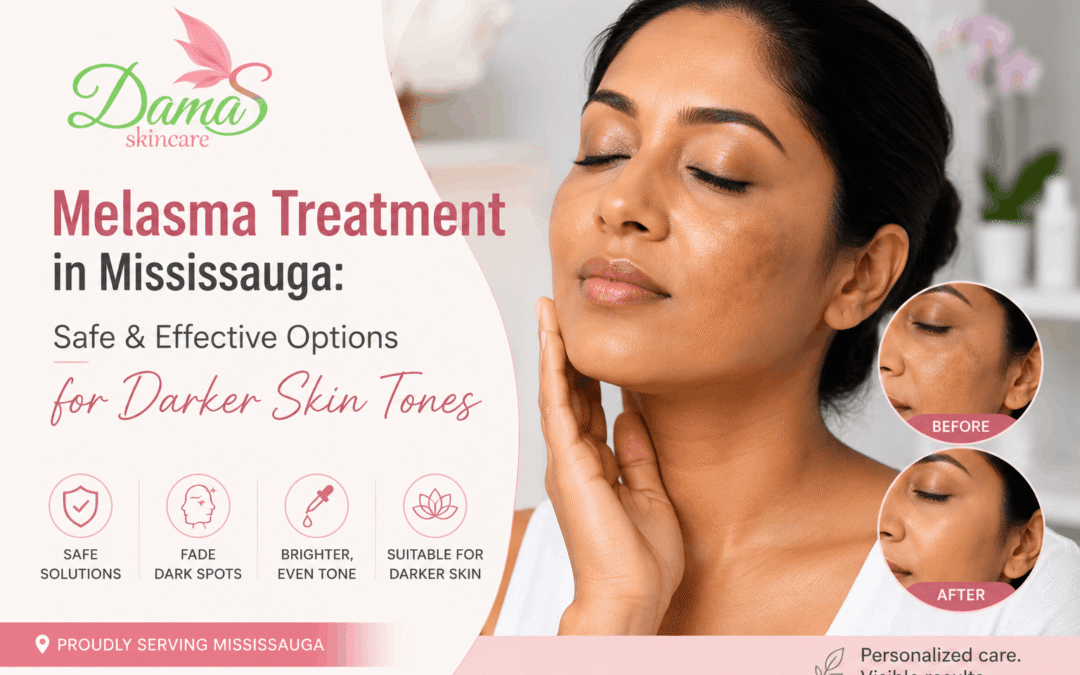
Dark patches on the face can be frustrating, especially when they seem to fade temporarily only to return again. For many people, this recurring pigmentation is caused by melasma—a common but often misunderstood skin condition that can be challenging to manage without the right treatment plan.
At Damas Skincare SPA & Laser Clinic, we regularly meet clients from across Mississauga who are concerned about uneven skin tone, facial pigmentation, or stubborn brown patches that haven’t responded to over-the-counter creams. These concerns are particularly common among individuals with naturally darker skin tones, including those from South Asian, Middle Eastern, African, Caribbean, and other richly pigmented backgrounds.
Unlike other forms of hyperpigmentation, melasma requires a more cautious and personalized approach. Treatments that may be appropriate for lighter skin can sometimes trigger additional pigmentation in medium to deeper skin tones if they’re not carefully selected. That’s why choosing an experienced provider who understands the unique characteristics of ethnic skin is just as important as choosing the treatment itself.
Whether you’re exploring melasma laser treatment, looking for the best treatment for melasma, or searching for safe hyperpigmentation treatment in Mississauga, understanding your skin and the underlying cause of pigmentation is the first step toward achieving healthier, more even-looking skin.
In this guide, we’ll explain what melasma is, why it commonly affects darker skin tones, which treatments are considered safe and effective, and how a personalized treatment plan can help manage pigmentation while reducing the risk of recurrence.
Why Melasma Is a Common Concern in Mississauga
Mississauga is one of Canada’s most diverse communities, with residents representing a wide range of ethnic backgrounds and skin tones. Many individuals naturally fall within Fitzpatrick Skin Types III to VI, meaning their skin contains higher levels of melanin.
While melanin provides some natural protection against ultraviolet (UV) radiation, it can also make the skin more reactive to inflammation. As a result, people with medium to deeper skin tones are often more susceptible to conditions such as melasma and post-inflammatory hyperpigmentation (PIH).
This is one reason why treatment plans that work well for one person may not be appropriate for another. Factors such as skin tone, pigment depth, hormonal influences, previous treatments, and overall skin health all play an important role in determining the safest and most effective approach.
At Damas Skincare SPA & Laser Clinic, every pigmentation consultation begins with a detailed skin assessment so that treatment recommendations are based on your individual needs rather than a one-size-fits-all protocol.
What Is Melasma?
Melasma is a chronic pigmentary skin condition that causes symmetrical brown, grey-brown, or tan patches to develop on sun-exposed areas of the face.
The condition most commonly affects the:
- Cheeks
- Forehead
- Upper lip
- Bridge of the nose
- Chin
Unlike freckles or age spots, melasma develops when melanocytes—the cells responsible for producing melanin—become overactive and produce excess pigment.
Several factors can contribute to this process, including:
- Sun and ultraviolet (UV) exposure
- Visible light
- Hormonal changes
- Pregnancy
- Genetic predisposition
- Certain medications
- Heat exposure
- Thyroid disorders in some individuals
Because multiple triggers are often involved, melasma is considered a long-term condition that is managed rather than permanently cured. With the right combination of professional treatments, medical-grade skincare, and consistent sun protection, many people experience a noticeable improvement in their skin’s appearance while reducing future flare-ups.
Why Does Melasma Develop?
One of the biggest misconceptions about melasma is that it’s simply another type of sun damage.
In reality, melasma is far more complex.
For many people, pigmentation develops because several triggers work together rather than a single cause alone.
Some of the most common contributing factors include:
Hormonal Changes
Hormonal fluctuations associated with pregnancy, birth control pills, hormone replacement therapy, or other endocrine changes can stimulate excess melanin production, which is why melasma is often referred to as the “mask of pregnancy.”
Sun and Visible Light Exposure
Ultraviolet rays and even visible light can activate melanocytes, causing pigmentation to become darker or return after treatment if adequate sun protection isn’t maintained.
Genetics
Many people have a family history of melasma, suggesting that genetics can increase an individual’s likelihood of developing the condition.
Heat and Skin Inflammation
Heat generated from prolonged sun exposure, certain skincare treatments, or inflammation within the skin may also contribute to pigment production in susceptible individuals.
Understanding these underlying triggers is essential because successful treatment isn’t only about reducing existing pigmentation—it’s also about minimizing the factors that encourage it to return.
Why Darker Skin Requires a More Personalized Approach
Treating melasma in medium to deeper skin tones requires careful planning and clinical experience.
Skin with higher levels of melanin responds differently to injury and inflammation than lighter skin. If treatments are too aggressive or the wrong technology is used, the skin may react by producing even more pigment—a condition known as post-inflammatory hyperpigmentation (PIH).
This is why professional treatment for melasma should never be based solely on promotional offers or trending procedures.
Instead, the treatment plan should consider:
- Your Fitzpatrick skin type
- The depth of pigmentation
- Your medical and hormonal history
- Previous cosmetic treatments
- Skin sensitivity
- Lifestyle and sun exposure habits
At Damas Skincare SPA & Laser Clinic, every treatment recommendation is tailored to these individual factors to help reduce unnecessary irritation while supporting gradual, natural-looking improvement.
Why a Professional Skin Assessment Matters
Although many people search online for the “best treatment for melasma,” there’s no single solution that’s right for everyone.
Two people with similar-looking pigmentation may require completely different treatment plans depending on the type of melasma, skin tone, underlying triggers, and previous treatment history.
During a professional consultation at Damas Skincare SPA & Laser Clinic, your skincare provider evaluates your skin in detail before recommending any procedure. In some cases, laser treatment may be appropriate. In others, a combination of topical skincare, chemical peels, microneedling, or other therapies may provide a safer and more effective outcome.
This personalized approach helps reduce unnecessary risks while creating a treatment plan that’s designed specifically for your skin—not someone else’s.
Can Laser Treat Melasma on Darker Skin?
One of the most common questions we hear during consultations is:
“Can a laser treat melasma on dark skin?”
The answer is yes—but not everyone with melasma is an ideal candidate for laser treatment.
Laser therapy can help improve certain types of pigmentation when used appropriately. However, melasma behaves differently from many other pigment concerns, particularly in medium to deeper skin tones. If the wrong laser, incorrect settings, or an overly aggressive approach is used, pigmentation may temporarily worsen instead of improving.
That’s why laser treatment should only be recommended after a thorough skin assessment. Factors such as your skin tone, the depth of pigmentation, previous treatments, hormonal influences, and overall skin health all play an important role in determining whether laser therapy is the right option for you.
At Damas Skincare SPA & Laser Clinic, every treatment plan is personalized to help achieve gradual, natural-looking improvement while minimizing unnecessary irritation.
Is Laser Always the Best Treatment for Melasma?
Not necessarily.
Although many people specifically search for melasma laser treatment, laser therapy is rarely considered a standalone solution.
Most skincare professionals agree that melasma responds best to a combination approach that addresses both existing pigmentation and the factors that contribute to future recurrence.
Depending on your skin’s needs, your personalized treatment plan may include:
- Carefully selected laser treatments
- Medical-grade topical skincare
- Professional chemical peels
- Microneedling
- Daily sun protection
- Long-term maintenance recommendations
Rather than focusing on one procedure, the goal is to improve your skin gradually while protecting its natural barrier and reducing the risk of rebound pigmentation.
Professional Laser Treatment for Melasma
For carefully selected patients, laser therapy can be an effective part of a comprehensive melasma treatment plan.
Certain laser technologies allow practitioners to target excess pigment while minimizing unnecessary heat and inflammation within the surrounding skin.
For individuals with medium to deeper skin tones, conservative treatment settings and appropriate wavelength selection are especially important. These decisions should always be based on a professional assessment rather than a standardized treatment protocol.
When laser therapy is recommended, treatment is typically performed over multiple sessions to allow gradual improvement while giving the skin time to recover between appointments.
Many clients notice progressive changes rather than dramatic overnight results, which is often the safest and most predictable approach when treating melasma.
Medical-Grade Skincare Plays an Essential Role
Professional skincare products are often one of the most important parts of successful melasma management.
Unlike cosmetic products available over the counter, medical-grade formulations are designed to target excess pigment while supporting the skin’s natural barrier.
Depending on your skin’s needs, your skincare provider may recommend products containing ingredients such as:
- Azelaic acid
- Tranexamic acid
- Vitamin C
- Retinoids
- Niacinamide
- Other clinically used pigment-correcting ingredients
These products are selected according to your skin type and treatment goals.
Consistent use of professional skincare before, during, and after in-clinic treatments can help improve overall results while supporting long-term maintenance.
Chemical Peels for Hyperpigmentation
When performed correctly, superficial chemical peels can be an effective option for improving uneven pigmentation in medium to deeper skin tones.
Rather than using aggressive formulations, experienced practitioners typically select gentler peeling agents that encourage gradual skin renewal while reducing unnecessary irritation.
Depending on your skin assessment, your treatment plan may include peels formulated with ingredients such as:
- Mandelic acid
- Lactic acid
- Azelaic acid
- Carefully selected glycolic acid formulations
Because every skin type responds differently, chemical peels should always be performed according to a personalized treatment plan rather than a one-size-fits-all approach.
Microneedling for Skin Rejuvenation
Microneedling may also be recommended for certain individuals as part of a comprehensive pigmentation management plan.
By creating controlled micro-injuries within the skin, microneedling stimulates the skin’s natural healing response and supports collagen production without relying on significant heat.
For appropriate candidates, microneedling may help:
- Improve overall skin texture
- Support healthier-looking skin
- Enhance the absorption of professional skincare products
- Complement other pigmentation treatments
Whether microneedling is suitable depends on your skin condition, the severity of pigmentation, and your provider’s clinical assessment.
Daily Sun Protection Is Essential
No professional treatment can provide lasting improvement if the skin isn’t protected from ongoing sun exposure.
Ultraviolet (UV) rays and visible light are among the most common triggers for melasma recurrence. Even after successful treatment, unprotected sun exposure can stimulate melanocytes and contribute to the return of pigmentation.
For this reason, most skincare professionals recommend:
- Applying a broad-spectrum sunscreen with SPF 30 or higher every day (or higher SPF if recommended by your provider).
- Reapplying sunscreen throughout the day when spending time outdoors.
- Wearing wide-brimmed hats and seeking shade whenever possible.
- Following a consistent home skincare routine designed for pigmentation management.
Daily sun protection isn’t just part of treatment—it’s one of the most important long-term strategies for maintaining your results.
Treatments That May Not Be Suitable for Every Skin Type
One sign of an experienced skincare provider is knowing when not to recommend a procedure.
Some treatments that appear effective online may not be appropriate for everyone, particularly individuals with medium to deeper skin tones or active melasma.
Depending on your skin assessment, your provider may recommend avoiding or postponing treatments such as:
- Highly aggressive ablative laser resurfacing.
- Deep chemical peels that may increase inflammation.
- Excessively abrasive exfoliation performed too frequently.
- Unregulated skin-lightening products purchased online.
- Procedures that generate excessive heat without appropriate patient selection.
Choosing treatments based solely on promotional offers or social media trends can sometimes lead to disappointing results or additional pigmentation concerns.
A professional consultation helps determine which options are most appropriate for your individual skin.
Why a Combination Approach Often Delivers the Best Results
Melasma is rarely caused by a single factor, which is why treatment often involves more than one solution.
For many clients, the most effective long-term strategy combines professional in-clinic treatments with medical-grade skincare, diligent sun protection, and regular follow-up appointments.
At Damas Skincare SPA & Laser Clinic Mississauga, our goal isn’t simply to reduce visible pigmentation today—it’s to help you manage melasma safely while supporting healthier, more even-looking skin over time.
Every treatment recommendation is tailored to your skin’s unique needs, helping you achieve gradual improvements with realistic expectations and a focus on long-term skin health rather than quick fixes.
Why Choose Damas Skincare for Melasma Treatment in Mississauga?
Managing melasma isn’t just about choosing the latest technology—it’s about understanding why the pigmentation developed and creating a treatment plan that’s appropriate for your skin.
At Damas Skincare SPA & Laser Clinic, we understand that no two cases of melasma are exactly alike. During your consultation, we take the time to assess your skin type, pigmentation pattern, lifestyle, medical history, and previous treatments before recommending any procedure.
For clients with medium to deeper skin tones, this personalized approach is especially important. Skin that contains more melanin often responds differently to certain treatments, making careful assessment and treatment planning essential for achieving safe, natural-looking results.
Rather than relying on a one-size-fits-all protocol, our goal is to recommend the combination of treatments that best supports your skin’s health while helping minimize the risk of unnecessary irritation or pigment recurrence.
Whether you’re experiencing melasma after pregnancy, dealing with long-standing facial pigmentation, or searching for a trusted provider for hyperpigmentation treatment in Mississauga, our focus is always on delivering personalized care based on your individual skin needs.
Why Long-Term Maintenance Matters
One of the most important things to understand about melasma is that improvement doesn’t end after your last treatment session.
Because melasma is a chronic pigmentary condition, ongoing maintenance plays a significant role in helping preserve your results.
Depending on your skin and lifestyle, your long-term care plan may include:
- Daily broad-spectrum sunscreen.
- Medical-grade skincare products recommended by your provider.
- Periodic maintenance treatments when appropriate.
- Avoiding unnecessary heat and excessive sun exposure.
- Regular skin assessments to monitor changes over time.
Many people notice that consistent maintenance helps keep pigmentation under better control while supporting healthier, more even-looking skin.
Frequently Asked Questions
Can lasers treat melasma on dark skin?
Yes—laser treatment can be appropriate for some people with darker skin tones, but it isn’t the right option for everyone.
Your suitability depends on factors such as your Fitzpatrick skin type, the type and depth of pigmentation, your medical history, and previous treatments. A professional skin assessment is the safest way to determine whether laser therapy should be included in your treatment plan.
What is the best treatment for melasma?
There isn’t one treatment that’s considered the best for every individual.
Many people achieve the best results through a personalized combination of professional treatments, medical-grade skincare, and consistent sun protection. The right approach depends on your skin type, pigmentation pattern, and the underlying factors contributing to your melasma.
Is melasma permanent?
Melasma is generally considered a chronic condition, which means it can improve significantly but may return over time.
Sun exposure, hormonal changes, heat, and genetics can all contribute to recurrence. Following your provider’s maintenance recommendations can help manage the condition more effectively.
How many treatment sessions will I need?
The number of sessions varies from person to person.
Your treatment plan will depend on the severity of your pigmentation, your skin’s response to treatment, and the procedures recommended during your consultation. Many people require multiple sessions along with ongoing maintenance to achieve the best possible outcome.
Can melasma come back after treatment?
Yes.
Even after successful treatment, melasma may return if its underlying triggers aren’t managed. This is why ongoing skincare, daily sun protection, and regular follow-up appointments are often recommended as part of long-term management.
Is sunscreen really necessary?
Absolutely.
Daily sunscreen is considered one of the most important parts of any melasma treatment plan. Protecting your skin from ultraviolet rays and visible light helps reduce the risk of pigmentation becoming darker or returning after treatment.
Can melasma be treated on South Asian or other darker skin tones?
Yes.
People with South Asian, Middle Eastern, African, Caribbean, and other richly pigmented skin tones can be treated safely when an individualized treatment plan is developed by a provider experienced in treating diverse skin types. Choosing appropriate treatment settings and avoiding overly aggressive procedures are key to minimizing the risk of post-inflammatory hyperpigmentation.
Book Your Personalized Melasma Consultation in Mississauga
If you’re frustrated by pigmentation that keeps returning despite trying different creams or treatments, you’re not alone. Melasma can be challenging to manage, but with the right diagnosis, personalized care, and realistic expectations, many people experience noticeable improvements over time.
At Damas Skincare SPA & Laser Clinic, every treatment begins with understanding your skin—not simply recommending a procedure. We’ll assess your skin type, identify potential triggers, discuss your concerns, and create a treatment plan tailored to your individual needs.
Whether you’re considering melasma laser treatment, looking for professional hyperpigmentation treatment, or searching for safe pigmentation removal options for medium to deeper skin tones, our team is here to help you make informed decisions about your skincare.
If you’re looking for trusted, personalized melasma treatment in Mississauga, schedule a consultation with Damas Skincare SPA & Laser Clinic and take the first step toward healthier, more even-looking skin.